Demystifying The Web: All You Need To Know About Web 1.0, 2.0, and 3.0

I'm developer and technical writer passionate about creating exceptional software solutions and crafting engaging technical content. With a strong background in software development and a flair for effective communication, I bring a unique blend of technical expertise and writing skills to my work.
Introduction
Over time, the Internet has become an integral part of our daily lives, making it easier to connect, access, and exchange information. I'm sure you've heard about Web 2.0 and Web 3.0 by now. Have you ever wondered what they signify or what life was like before Web 2.0?
In this article, we will demystify the web by looking at its three main generations: Web 1.0, Web 2.0, and the new Web 3.0. Stay tuned as we delve into the web's past, present, and future, covering how it has affected our digital experiences thus far and what lies ahead in its ever-changing world.
What is The Web?
In simple terms, the Web, short for the World Wide Web, is a system of interconnected web pages and online content that can be accessed through the Internet. It is like a vast network of information and services that you can explore using a web browser, such as Google Chrome or Mozilla Firefox.
The concept of the World Wide Web was proposed by Sir Tim Berners-Lee in 1989 while working at CERN. He developed the necessary protocols, such as HTTP (Hypertext Transfer Protocol) and HTML (Hypertext Markup Language), to enable the creation and sharing of webpages. The first web browser, called WorldWideWeb (later renamed Nexus), was also created by Berners-Lee.
The web allows you to search for and view websites, watch videos, connect with people through social media, shop online, read articles, and much more. It has become an essential tool for communication, learning, entertainment, and accessing information from anywhere in the world with an internet connection.
Web 1.0: The static web
In the beginning, the internet was like a library. You could read and see things, but you couldn't do much else. Web 1.0 was the first stage in the evolution of the World Wide Web, lasting roughly from 1989 to 2004.
The web was made primarily of static web pages at the time, content creators were very few, and users were mostly content consumers. Because there was little user engagement and contribution, Web 1.0 was static and one-way.
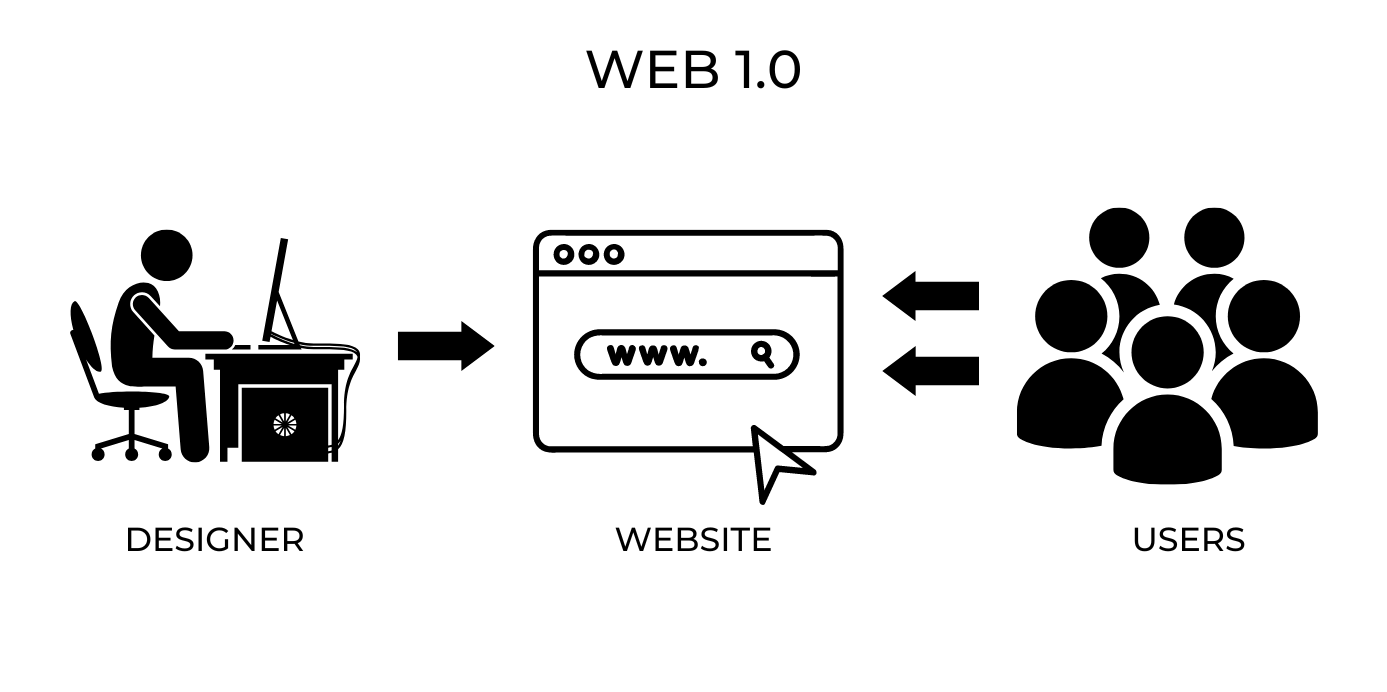
Characteristics of Web 1.0
Static Websites: Static websites display information in a fixed format. The content on these websites is not dynamic; they remain unchanged over time
Limited User Interaction: Web 1.0 websites offered limited opportunities for user interaction. Users could browse and consume content but had minimal options to engage or actively participate.
One-Way Communication: Communication on Web 1.0 was mostly one-way, with websites delivering information to users. There were limited mechanisms for users to provide feedback or engage in dialogue with website owners or other users.
Lack of Personalization: Web 1.0 websites generally provided the same content to all users, with minimal personalization options based on individual preferences or browsing history.
Slow Internet Speeds: Web 1.0 operated during a time when internet speeds were relatively slow, leading to longer load times for websites and limited multimedia capabilities.
Rigid content: One of the key features of Web 1.0 was that content was primarily provided from the server's filesystem instead of a relational database management system (RDBMS).
Lack of Social Media: Social media platforms as we know them today did not exist in Web 1.0.
Web 1.0 Applications
Yahoo
Netscape Navigator
Alta Vista
Geocities
AOL (America Online)
Oh, those Web 1.0 days! The internet was pretty dull back then, right? Static websites, minimal interaction, and plain old content. But fear not, my friends! We're diving into the next-gen internet. Web 2.0 and beyond bring excitement, interactivity, and endless possibilities. Say goodbye to Web 1.0's boredom and Get ready for a whole new world of excitement!
Web 2.0:participatory web
Welcome to the era of Web 2.0, where the internet has undergone a remarkable transformation. Web 2.0 represents a shift from static web pages to interactive and dynamic online experiences. It's a world of user-generated content, social media, and collaborative platforms that empower users to actively participate, connect, and create.
Web 2.0 emerged in the 2000s, gaining attention from the coining of the term by Darcy DiNucci in 1999 to discussions by Tim O'Reilly and Dale Dougherty in 2004. It was popularized by O'Reilly Media and represents an evolving generation of the web with increased focus and attention.
Web 2.0 does not have a specific inventor or origin but signifies the growth of user participation and interactive experiences on the internet.
Also known as the participatory web, it's all about users getting actively involved! It's a newer version of the internet that focuses on things like creating your content, connecting with others, and making it easier for everything to work together smoothly. It's all about giving users the power to participate, share, and enjoy a more interactive online experience.
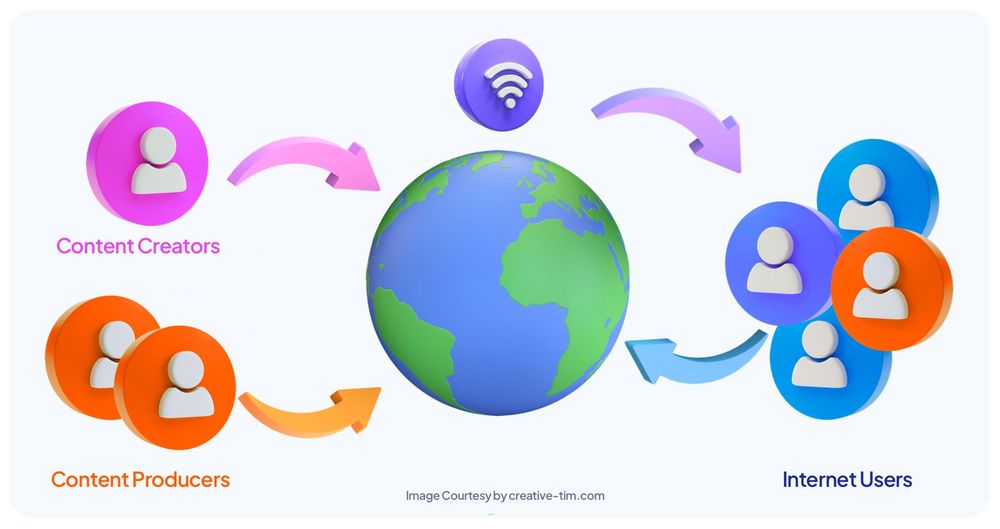
Characteristics of Web 2.0
User-generated content: Web 2.0 empowers users to go beyond passive reading and engage in the creation of content. Users also contribute by leaving comments on articles and creating user accounts and profiles that enable active participation.
You're reading this article now on Hashnode, which is a platform where Technical writers share their content, Web 2.0 is so fun, right?
Interactivity: Web 2.0 platforms facilitate interaction and collaboration among users. It enables commenting, liking, sharing, and real-time communication, fostering a sense of community and engagement.
Customization: Web 2.0 emphasizes tailoring the online experience to individual users' preferences. Websites and services offer personalized recommendations, customizable layouts, and personalized content delivery based on user data.
Rich user experience: Web 2.0 makes browsing interactive. Imagine clicking on a product to read reviews, compare prices, and make a purchase instantly. It's like having a shopping assistant at your fingertips!
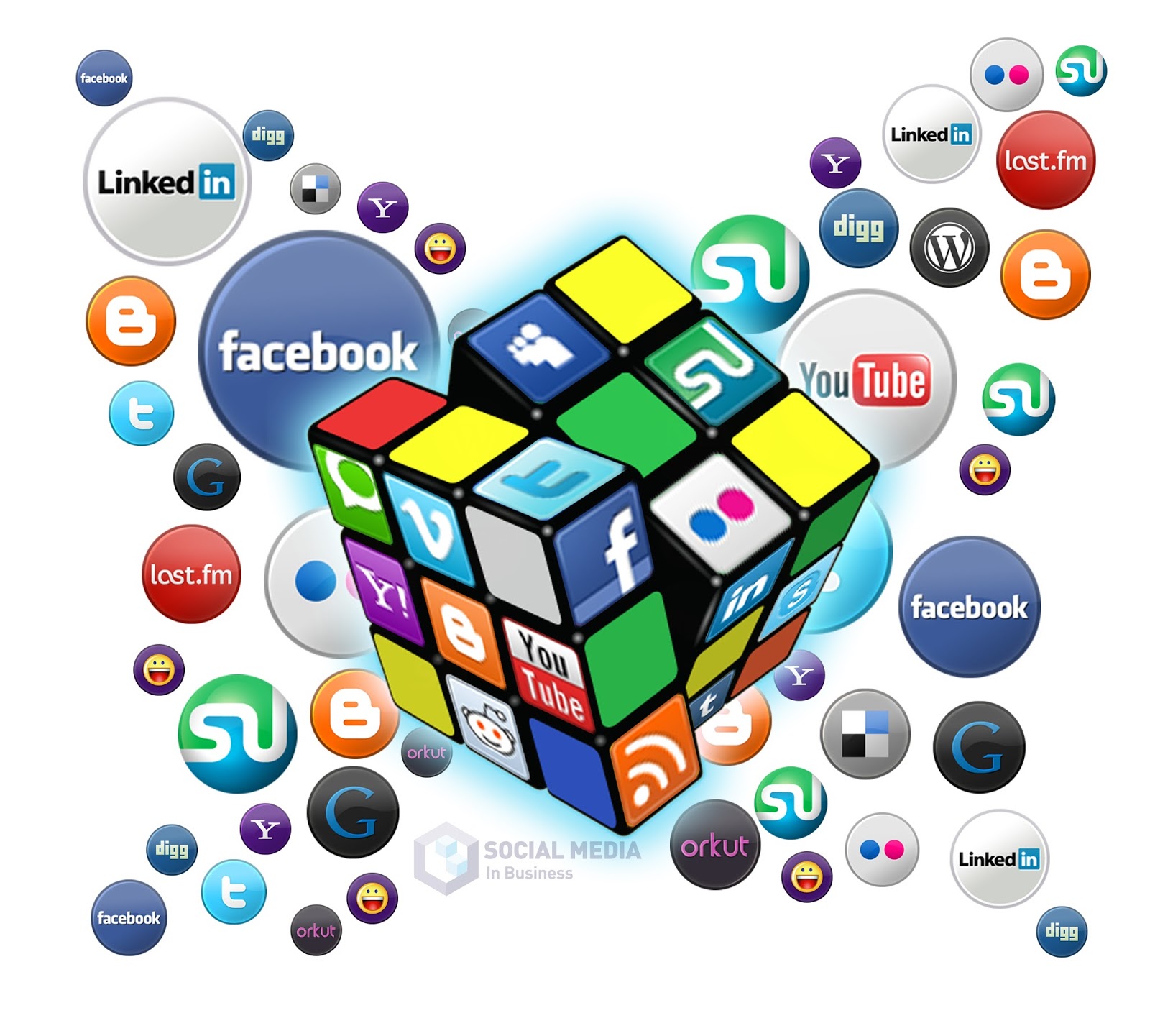
Social media: I'm sure you have numerous social media accounts, including Facebook, Instagram, LinkedIn, Twitter, TikTok, Snapchat, Whatsapp, Thread, and others. All thanks to Web 2.0, you may now stay in touch with relatives and friends all around the world.
Web applications and APIs: Web 2.0 introduced the concept of web applications that run within a browser, offering functionality similar to traditional desktop software. Application Programming Interfaces (APIs) allow different platforms to interact and share information and data.
Web 2 Applications
Facebook
Instagram
Twitter
Youtube
LinkedIn
Github
Web 3.0: Decentralized web
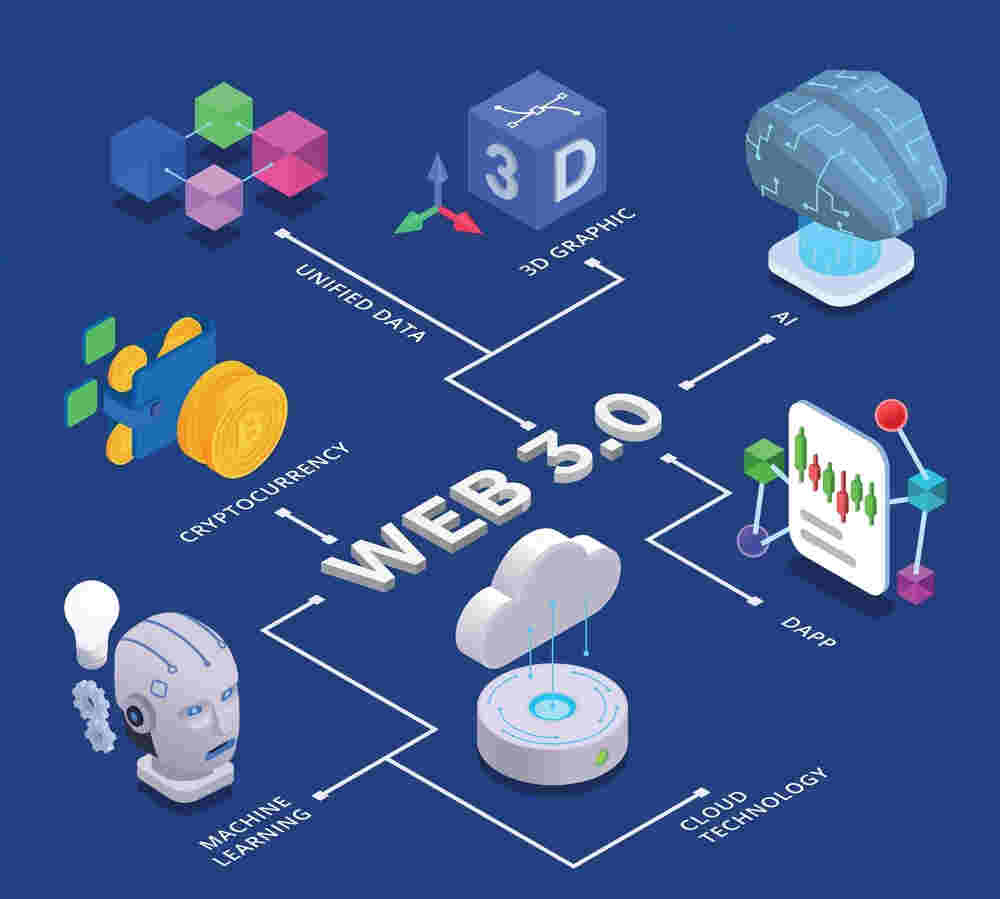
Web 3.0 is the most recent generation of the web. Polkadot founder and Ethereum co-founder Gavin Wood created the phrase "Web3" in 2014 and defined it as a decentralized online ecosystem based on blockchain.
It is a revolutionary chapter in the evolution of the internet. It builds upon the foundations of its predecessors, Web 1.0 and Web 2.0, to create a more open, inclusive, and user-centric digital ecosystem.
Users can create and own their data and content without the need for a centralized server, just like the "Big Tech" companies (like Facebook, Twitter, and so on).
Features of Web 3.0
Decentralization: Web 3.0 seeks to eliminate dependency on central authority and intermediaries. Unlike in Web 2.0, where huge tech companies act as the web's core server, users in Web 3.0 can maintain data ownership and management without relying on a centralized authority.
Blockchain Technology: Blockchain is a distributed ledger that securely stores information by utilizing a peer-to-peer network of computers that interact with one another and smart contracts that are self-executing, thereby eliminating the need for a central authority.
Artificial Intelligence (AI) and Machine Learning (ML): AI and ML algorithms can analyze vast amounts of data to understand user preferences, behaviours, and interests. This information can be used to tailor content, recommendations, and interactions across different platforms and services, providing users with a more personalized and relevant experience.
Cryptocurrency: Cryptocurrencies such as Bitcoin, Ethereum, and others would replace government fiat currency.Making bank authorities obsolete and transactions more secure and transparent because cryptocurrencies use blockchain technology.
Semantic Web: The semantic feature of Web 3.0 transforms the internet from a collection of disconnected documents to a vast network of interconnected and meaningful data points. This results in more intelligent applications, better search experiences, and improved interactions between humans and machines.
Edge-computing: It involves the distributed approach of processing and analyzing data closer to the source, rather than relying solely on centralized cloud servers. Data is processed at the "edge" of the network, closer to where it is generated.
Internet of Things (IoT): Integrating physical devices with the internet, allowing them to communicate and exchange data, leading to applications in smart homes, cities, industries, and more.
Web 3.0 Applications
Uniswap
Aave
OpenSea
Decentraland
Steemit
Storj
Importance of the Web in our lives
Information and Knowledge Access: The web is a vast repository of information on virtually every topic. It allows us to quickly access news, research, tutorials, and educational resources, empowering continuous learning and informed decision-making.
Communication and Connectivity: The web connects people worldwide through emails, social media, messaging platforms, and video calls. It enables instant communication, fostering relationships, collaboration, and sharing experiences with friends, family, and colleagues regardless of distance.
Work and Productivity: Many aspects of modern work heavily rely on the web, from remote collaboration and project management to accessing cloud-based tools and resources. It offers opportunities for remote work, flexible schedules, and global business interactions.
Entertainment and Recreation: The web provides a wide range of entertainment options, including streaming movies, music, videos, and online games. Social media platforms offer a space for creativity, expression, and connecting with like-minded individuals.
The future of the web
The future of the web holds exciting possibilities with Web 3.0 evolving with its different amazing features, as stated earlier. Users will experience a more user-centric, interconnected, and dynamic digital web.
Some technologies and concepts associated with Web 3.0, such as blockchain, decentralized applications (DApps), and digital ownership through NFTs, have gained prominence.
While progress is being made towards these goals, the complete realization of Web 3.0's vision may take some time, as it requires widespread adoption of new technologies, changes in internet infrastructure, and shifts in user behaviours.
Conclusion
The evolution of the web has been a remarkable journey that has transformed the way we communicate, access information, conduct business, and experience the world.
From the early days of static websites to the dynamic and interconnected platforms of today, the web's growth has been marked by innovation, technological advancements, and shifts in user expectations.
The journey of the web's evolution is an ongoing narrative, shaped by our collective aspirations and the continuous interplay between technology, human creativity, and societal progress.
This journey seems unending because there is more to come, and we eagerly look forward to the exciting possibilities that the web's future has in store for us.


